Blakeney New Rectory – judicial review rejected

Blakeney New Rectory – judicial review rejected

Bad news, alas. We have learned this morning that the High Court has rejected North Norfolk Planning Watch’s case for judicial review of the decision by North Norfolk District Council to allow demolition of the historic, locally much-loved Blakeney New Rectory.

We’re disappointed that, despite all the effort involved in assembling the case and excellent work on the part of our legal team, the judge did not uphold any of our grounds for judicial review.

We’re even more disappointed that, despite expressions of concern from so many local residents, as well as strong statements of support from groups including SAVE Britain’s Heritage, the Twentieth Century Society and the Rectory Society, there appears to be no way to save a remarkably intact 1920s architect-designed parsonage from demolition. Replacing this gentle old house with an ugly, out-of-scale ‘trophy home’ is the sort of casual historical vandalism that will, doubtless, seem totally inexplicable to our children and grandchildren in years to come.

Given the judge’s ruling, we have been advised that there is no scope for further appeal.

We’re enormously grateful to everyone who has helped with the campaign to save Blakeney New Rectory, whether through raising concerns at the planning stage, contributing to the costs of the judicial review, or simply through offering strong words of friendship and support.

It’s important for all of us to remember that, although we lost this battle, we have nonetheless achieved something important.

Taking this case to court – as with similar pressure from other local residents and organisations involved in contentious planning cases – brings greater scrutiny to the sometimes murky, often undemocratic and unaccountable world of North Norfolk’s planning decisions. As this case demonstrates, it is formidably difficult to overturn planning decisions once they have been made, especially given the limited grounds on which judicial review is possible, and the extremely high costs of pursuing a judicial review action.

This is all the more reason, then, for all of us to remain constantly vigilant regarding our parish councils, district councils and statutory consultative bodies. Are they listening to local people, or instead working for the interests of developers who care nothing for our area’s unique heritage?

At NNPW, we will continue to do all we can to protect what is so special, yet also so fragile and easily lost, about our own distinctive corner of Norfolk.

Yours sincerely

(Dr) Barendina Smedley
Director
North Norfolk Planning Watch

Close run thing: 1930s Norfolk pub receives Grade II listing

Here’s that rare event, good news relating to an inter-war building in Norfolk. As both the EDP and the BBC have reported, the Iron Duke public house in Great Yarmouth has, after a sustained campaign by local residents, been awarded a Grade II listing by the Department for Culture, Media and Sport.

The playful seaside building, built in the late 1930s and finally completed in 1948, has stood empty for several years now, and was thought to be in danger of demolition. Fortunately, it has at least two things going for it.

One is its architectural interest. As a spokesperson for Historic England put it, ‘The Iron Duke’s Art Deco style, with its distinctive massing, curved frontages and flat roofs, is visually striking and architectural elements such as the fluted columns are unusual and quirky.’

One might pause to wonder why, when it comes to preserving our generally under-appreciated inter-war public buildings, ‘unusual and quirky’ is invariably given priority over ‘characteristic and well-integrated’, but let’s pass over that for a moment, thrilled as we are with the decision to protect this pleasing structure. Continue reading “Close run thing: 1930s Norfolk pub receives Grade II listing”

Blakeney New Rectory: what it was and could be again

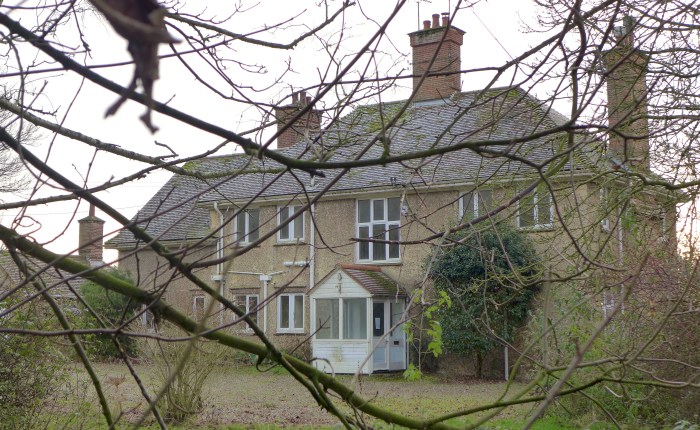
In its current state — threatened with demolition, and awaiting the judgement of the High Court at the end of this month regarding its future — Blakeney’s former Rectory looks rather neglected and unloved. Of course, in truth, it is very dearly loved by many local people, both for its important role in the history of our village, and also for its handsome, old-fashioned, agreeably mellow presence, fitting in so gracefully with the buildings and landscape surrounding it.

NRsmall

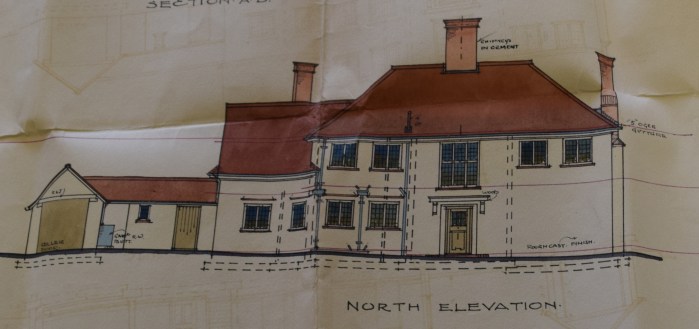
All the same, it might be worth remembering how the New Rectory looked before the Church of England took the bizarre decision to replace its attractive leaded windows with U-PvC ones a few decades ago — indeed, how it looked when it was built in 1925, because other than the removal of its windows, it has changed hardly at all over its 90-something years of existence. Continue reading “Blakeney New Rectory: what it was and could be again”

Historic England: North Norfok conservation areas at risk

Historic England: North Norfok conservation areas at risk

In recent days, Historic England have published their annual ‘Heritage At Risk’ document, including the regional breakdowns of ‘at risk’ properties and landscapes. A brief overview is available here.

One particular area of emphasis this year related to conservation areas. Conservation areas are places awarded a protected status by the local council, Historic England or the Secretary of State for the Environment in recognition of their special architectural or historical interest.

Here is what the overview above says about the general situation regarding conservation areas:

Conservation areas

Of particular concern is the high number of Conservation Areas on the Register in the 50th anniversary year. 47 Conservation Areas were added this year, making a total 512 at risk. A recent YouGov poll commissioned by Historic England found strong public support for conservation areas, but only a small majority of those surveyed who live in a conservation area (56%) were aware that they actually live in one. Historic England would like to see local authorities raising awareness of Conservation Areas, especially among homeowners and commercial property owners. Common problems facing Conservation Areas are unsympathetic doors, windows and new extensions, poorly maintained streets and neglected green space. Historic England continues to work with councils and other partners to address these issues.


As a part of this emphasis, Historic England identified 512 conservation areas at risk of neglect, decay or inappropriate change. Four of these conservation areas are located in North Norfolk. The regional report for the East of England is available here, with the section relevant to North Norfolk conservation areas appearing on page 45. The areas at risk include Fakenham, Cromer, Happisburgh and Melton Constable Park.

In fairness, North Norfolk includes rather a lot of conservation areas — 81, in fact — which is no surprise, given the region’s distinctive history, unique natural environment and unforgettable ambience. What is surprising, though, and also hugely concerning, is the way in which some of these areas have been allowed to deteriorate, in large part through poor stewardship on the part of the North Norfolk District Council.

To be included on the ‘Heritage at Risk’ register, the rate of deterioration has to be pretty spectacular, with the condition of the relevant areas listed as ‘poor’ to ‘very bad’. To what extent, then, are the four areas listed here only the tip of the iceberg?

NNDC has a duty to carry out conservation area appraisals for all the conservation areas in its ambit. But to what extent does it actually fulfill this obligation? And to what extent does it take seriously the sensitive management of conservation areas when making planning decisions?

Historic England’s report at the very least raises questions about NNDC’s real commitment to safeguarding North Norfolk’s conservation areas. The impression created is of a NNDC conservation setup that has, at best, slipped into a culture of inaction and indifference — or at worst, one where the interests of developers are given priority over the preservation of our unique, historic and valuable local environments.

Hornsea Three and the power of public opinion

Windfarms, for better or worse, are now a part of everyday life on the North Norfolk coast. The view north from the crest of that ridge near Kettle Hill, as one drives towards Blakeney on the Langham Road, is now as much about the distant ghostly towers of Sheringham Shoals as it is about the marsh, the sea, the sky.

Of course, there is a lot to be said for wind power — it reduces reliance on fossil fuels, as a technology it is constantly improving, while to a limited extent, at least, windfarms have provided a boost to the local economy. But at the same time, it cannot be denied that, even now, they have had a profound impact upon the appearance, and possibly the natural environment, of our own remarkable Area of Outstanding Natural Beauty.

In recent weeks, details relating to Dong Energy’s proposed Hornsea Three project have started to trouble many in North Norfolk. That this is the case is due in large part to the vigilance and hard work of Godfrey Sayers and the Friends of North Norfolk.

Although the proposed windfarm, apparently the largest in the world, is proposed to be built off the Yorkshire coast, it will ‘come ashore’ at Weybourne.

Rather bizarrely, such projects are not required to specify whether they are pursuing an AC or DC option until after planning consent has been granted. Mr Sayers has been untiring in his efforts to draw attention to the effects, in particular, of the proposed HVAC option, which would involve both large land-based booster stations and extensive cabling. These would, he rightly argues, have a profound and negative effect on the North Norfolk coast. The HVDC option, in contrast, would be considerably less intrusive.

Mr Sayers has asked that anyone who feels that the HVAC option, with its accompanying disruption to lives and landscape, should be rejected in favour of the HVDC option, which would not require booster stations or extensive cabling, should make their views known at the following address:

contact@hornsea-project-three.co.uk

At NNPW, we very much welcome Mr Sayer’s efforts to hold to account both the planners who are meant to be looking after our interests, and also commercial parties who may otherwise not fully understand the significance of our beautiful and unique part of the world, or the extent of local people’s feelings regarding it.H

Clear danger for bats

We have long known the danger that glass façades present to anything with wings, so definitively pinned down in the opening lines of Vladimir Nabokov’s great Pale Fire:

I was the shadow of the waxwing slain
By the false azure in the windowpane
I was the smudge of ashen fluff — and I
Lived on, flew on, in the reflected sky […]

What is far less well known, however, is the perils that huge expanses of reflective surfaces present specifically to bats, creatures which exist in abundant variety along our North Norfolk coast.

Recently, the Max-Planck-Gesellschaft — Germany’s internationally-respected research and science organisation — published a fascinating report on the way in which large areas of glass affect bats’ ecolocation abilities. A summary of the report is presented here.

It appears that bats are hard-wired to interpret large, smooth vertical surfaces not as barriers, but as open flyways. This is particularly true when bats are in a hurry or under stress, as at such moments they are forced to interpret their own ecolocation data in a more cursory way. The danger this poses is obvious. Continue reading “Clear danger for bats”

Update: the former Blakeney Rectory

We have previously referred to the proposed demolition of the former Rectory at 8 Wiveton Road, Blakeney, Norfolk.

Following the obtaining of legal advice, we have filed an Application with the Administrative Court seeking Judicial Review of North Norfolk District Council’s decision to grant permission for the demolition of Blakeney Rectory and the erection of a replacement dwelling.

Permission to pursue the Application to a full hearing was given by the Honourable Mr Justice Collins towards the end of May, and the full Judicial Review hearing will take place in the High Court on 29th November 2017.

We will post further developments on this website as they occur.

Sheringham sham

The derelict Shannocks Hotel at the clifftop end of Sheringham’s High Street is, to be kind, an eyesore. With its tragic blind windows, flaking blue paint and generalised air of neglect, underfunding and hopelessness, the message it sends to the world regarding the north Norfolk coast is hardly an encouraging one. Quite clearly, something needs to be done about it.

Yet it is a source of concern — and a rather familiar concern, too — that the first instinct of the North Norfolk District Council is not to seek the renovation of the existing structure, sited within a conservation area, but rather to demolish the whole thing (including the greatly-cherished carpark attached to it) and develop the site. NNDC’s plan, apparently, is to replace the existing hotel with 10 two-bedroom flats, four commercial units and a first-floor restaurant.

NNDC have set aside £500,000 for a compulsory purchase from the developers who own the site at present if they fail to act. Meanwhile, the previous owners have expressed a desire to buy back the hotel, and to run it as a hotel. Yet the NNDC carry on, regardless.

I have not been able to discover the date of the Shannocks Hotel. (For anyone not local, ‘Shannocks’ is simply what people from Sheringham call themselves.) To our eagle-eyed team at NNPW, the building looks Edwardian, albeit with a recent injection of the egregious uPVC replacement windows that blight so much in our world today — in particular, blinding the easily-confused to the actual age of the structure.

And yet even in recent newspaper photos of the discouraged-looking site, e.g. here, the Shannocks Hotel, in a very prominent, cliff-top location, still throws up an impressive outline. Its extremely traditional, red-pantiled roof signals ‘north Norfolk’ as clearly as anything could. Its outline, more than anything, speaks to Sheringham’s fabled history as a Poppyland holiday town. Dereliction aside, it looks like Sheringham.

Alas, the NNDC is, however, seemingly oblivious to 20th century architecture. Let’s see what the current edition of Pevsner (2nd ed, 1997) has to say about Sheringham, shall we?

“The place was chiefly developed in the 1890s and early C20, i.e. it looks very much more cheerful and civilised than, say, Hunstanton, which was built in the 1860s and 70s.”

So, in the eyes of the UK’s premier architectural guide, the early 20th century is a key part of what gives Sheringham its distinctive — and, in this case, ‘cheerful and civilised’ — look. Let’s remember, too, that what the Pevsner guide references here isn’t important, individual set-piece edifices — it is the general, generic look of the town. So to demolish one of these mainstream, early 20th century buildings, especially in such a prominent and sensitive location, is to alter the look of Sheringham itself.

Certainly, it is not a thing that should be done casually. Possibly, it is not a thing that should be done at all.

What, however, do the NNDC propose by way of a replacement? The local press provides computer-generated images, e.g. here. Designed by Lucas Hickman Smith, a firm that has completed some strong work in Norfolk, including impressive projects related to listed buildings, the replacement structure — with its grey roof, glass balconies and whimsical yellow panels — does not seem keen to establish any very obvious bonds with the locality. It could be any building, anywhere in the UK, built on the specified budget by public clients of rather limited aspirations. We struggle to see how it connects with Sheringham, other than by showing indifference towards its history, its traditions — towards Sheringham’s ineffable, refined, definitely-not-Yarmouth-or-Hunstanton-either-thanks character.

Also, it is not by any stretch of the imagination cutting-edge contemporary architecture. It is patently the fruit of the 1980s, harvested late, dumped in a provincial seaside town that apparently doesn’t know any better.

We find it sad that there is nowhere, online, a strong defense of the existing hotel, spelling out its history, its architectural background, its relationships with the world around it. But we partially blame this gap on NNDC. Why on earth are local conservation bodies not more alert to the significance of historic local buildings? Why should  excellent but overstretched organisations like SAVE Britain’s Heritage and the C20 Society have to do all the heavy lifting? Should we not have an actual statutory conservation body, with both real teeth and real architectural knowledge, willing and able to fight for our built environment?

Remember, too, the all-too-obvious point that frequently eludes Norfolk planners — if we don’t preserve a few 80, 90 and 100-year old buildings, in time, the 200, 300 and 500-year old buildings are going to be a bit thin on the ground.

As mentioned above, the present state of Shannocks Hotel is not acceptable. We understand the impatience shown by NNDC when it comes to the improvement of the present site.

What NNPW will never accept, however, is NNDC’s default retreat to demolition, and redevelopment, as our go-to option.

The North Norfolk coast is special. It is beautiful, strange, stirring, compelling and unique. There is nothing like it on earth. It doesn’t suit everyone, true, but to those who warm to it, nothing on earth compares with it. This is not just the fruit of its natural beauty, either, although that is a part of it — it is a fruit of its unique, evolved, distinctive character. NNDC, with its tin ear for the built environment, and its total blind spot regarding 20th century buildings, ignores this at its peril. If you make our magical and historic coastline just like anywhere else, why will anyone come here to visit it? And who wants to live in some identikit flat above an unwanted identikit restaurant?

Let us picture, instead, a happier future for the Shannocks Hotel. Perhaps someone will buy it who actually likes and understands it. They will do up the existing building, playing on its existing strengths rather than pulling against them.

Perhaps they will, for instance, play up to the early 20th century history, installing Bakelite light-switches, traditional sanitary ware, historic decorating schemes — remembering, as they do so, the great success of the revived Poppy Line. The carpark, much valued by actual Shannocks, will endure. Meanwhile, Sheringham will get to work marketing itself as the beautiful historic seaside town it already is. It will embrace its history, rather than seeking to obliterate it under a sea of unsympathetic, reflexive modern development.

The north Norfolk coast faces many threats, but among them, obliviousness to the importance of early and mid 20th century building is a major threat. Put bluntly, people visit this place, love it, come to live here, because of how it looks right now. And much of north Norfolk’s built environment is rooted in the early to mid 20th century. Obliterate that under a sea of unsympathetic, ill-thought-out, budget-led contemporary building, and the spell is broken.

This isn’t to say that really first-rate, well-thought-out, sympathetic contemporary architecture doesn’t have a role to play. Of course it does, especially on green-field sites. But as for destroying what will, in another few hundred years, be incredibly important, listed, historic evidence of our distinctive local appearance — that is a disaster. A Norfolk that looks like the rest of the world is, let’s face it, like the rest of the world.

Is that really what you want, NNDC?
 

plumo


Blakeney Rectory: can we save it?

Blakeney Rectory: can we save it?

On 21 January 2017, North Norfolk District Council’s Development Committee voted unanimously to allow the demolition of the former Blakeney Rectory, located near the church of St Nicholas in Blakeney, and to allow the construction of a considerably larger replacement structure designed in an aggressively modernist idiom, as well as the construction of a tennis court where the Rectory’s gardens stand at present. The planning permission was issued the following day.

The NNDC backed this development proposal despite substantial community objections based on sound planning reasons. Nearly 50 objections were posted on the NNDC’s own website, virtually all of them from local people, with only a single email of support for it. Substantial evidence was also submitted to explain why demolition and its replacement house design would neither preserve nor enhance the Conservation Area, an argument echoed by national conservation bodies SAVE Britain’s Heritage and the C20th Society.

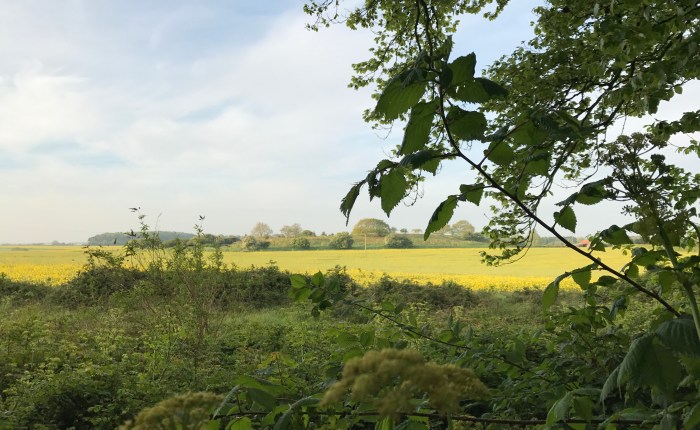
The NNDC Conservation Officer, belatedly, also rejected a request for the current building to be locally listed despite acknowledging ‘the prominent position of this building when approaching from the south from Wiveton and long distance views from the south west’.

Within Blakeney and other nearby villages, the decision has been greeted with surprise, consternation and real sadness. At church the other morning, one resident recalled the many happy social occasions she and others had attended at the Rectory over many decades, while another spoke movingly of her memories of the place, which included making her wedding plans there, more than half a century ago.

For while the evidence submitted to the NNDC provided a wealth of information regarding the architectural significance of the building — the Rev. David Lee Elliott had commissioned the design from local architect John Page, of Holtom & Page, in 1925, specifically to complement the nearby Old Rectory (Grade II*) which Lee Elliott had recently purchased from the diocese — what it cannot fully reveal is the strength with which many long-time local residents feel that this handsome if slightly neglected old building is part of their own personal heritage. The idea of demolishing it, just to replace it with an assertive eyesore marring a sensitive and historic location, appalls them.

Furthermore we have serious concerns regarding NNDC’s approach to this application, particularly in light of the strong national and local planning policy grounds highlighted by many of the objectors to the proposal. For instance, neither Glaven Valley nor Blakeney Conservation Area has a Conservation Area Appraisal which would have allowed proper assessment of the contribution made by the former Rectory to the surrounding landscape and the conservation area. Notification of the application to local residents was at the absolute legal minimum, so many residents remained unaware of the application until very late in the day, in numerous cases until after the formal consultation period was finished. No wonder people in the area are so frustrated by the result.

Is there anything that can be done to save Blakeney Rectory? So many local people would prefer to see the old building sensitively restored and lived in once again as a family home, its pretty gardens still alive with the birds, hares and other wildlife that enjoy its quiet, old-fashioned, low-key ambience. This, not showy trophy homes, is what Blakeney is — or at least used to be — all about.

Here at North Norfolk Planning Watch, we are considering various options. Stay tuned for further developments.